

Black Library: The App
Games Workshop Limited
I approached Black Library: The App as a reader first, not as a Warhammer collector looking for another place to browse. Its purpose is clear: it puts Black Library audiobooks and eBooks into a mobile reading environment, making it easier to keep Warhammer fiction close when a physical shelf or a desktop screen is not practical. That focus is both its strongest quality and its biggest limitation.
This is a free Books & Reference app from Games Workshop Limited, aimed at Teen users and available for devices running at least Android or iOS version 10. The app has passed the early curiosity stage with over fifty thousand installs, but its average rating sits at 1.9 from around four hundred ratings, so I would not recommend installing it without first understanding what kind of reader it serves. The low score is an important warning to investigate your own priorities rather than assume the Warhammer brand guarantees a smooth experience.
How I would decide whether it belongs on your phone
The first question is not whether you like Warhammer. It is whether you want a dedicated way to read or listen to Black Library material. If your main goal is browsing general books, managing a mixed library, or using a familiar reading service for many publishers, this app is unlikely to replace your usual option. If you already follow the setting and prefer audiobooks or digital editions, its narrow purpose becomes much more attractive.
I would also separate three decisions that are easy to confuse. One is discovering what is available. Another is buying or accessing a specific digital book. The third is actually reading or listening comfortably over time. A focused app can be helpful for the first two while still feeling less convenient than a mature general-purpose reader for the third. That distinction matters because a store summary can make the whole experience sound simpler than it feels in everyday use.
The free download lowers the barrier to trying it, but the app includes purchases ranging from $2.99 to $99.99 per item. That broad range means I would treat the app as a storefront and library tool rather than assume every title follows the same pricing pattern. Before committing to a large reading plan, I would check the individual book page, confirm whether it is an audiobook or eBook, and think about how often I expect to use that format.
Related News

Why WhatsApp Messenger Still Makes Everyday Communication Feel Easy

Jurassic World: The Game Is the Better Dino Tycoon for Strategic Players

Threads in Real Life: Who Should Join, Lurk, or Leave

How SHEIN Turned Shopping Into an Endless Content Feed

How to Make Fortnite Feel Smarter on Mobile

Should You Switch to Microsoft Outlook on Mobile?
My practical test would be simple. I would install it on the phone or tablet I actually use for reading, sign in if required, search for a familiar author or series, open a sample or product page where available, and then test the transition from discovery to playback or reading. I would also close and reopen the app, rotate the device, and return to the same title. These are small checks, but they reveal more about daily suitability than a quick look at the catalog.
A useful fit for readers who move between short sessions
The clearest use case is a Warhammer fan who reads in fragments: a few pages while waiting, an audiobook during a commute, or a chapter before sleep. A dedicated library can reduce the mental effort of remembering where a title came from. Instead of searching a general ebook marketplace and filtering through unrelated editions, you begin in a space built around Black Library material.
I also see value for someone who is building a digital reading habit after relying on paper books. Physical editions are satisfying, but they are not always convenient to carry, and audiobooks suit situations where looking at a screen is impossible. Having both forms associated with the same publishing ecosystem can make it easier to choose based on the moment rather than the format you happened to buy first.
Gallery
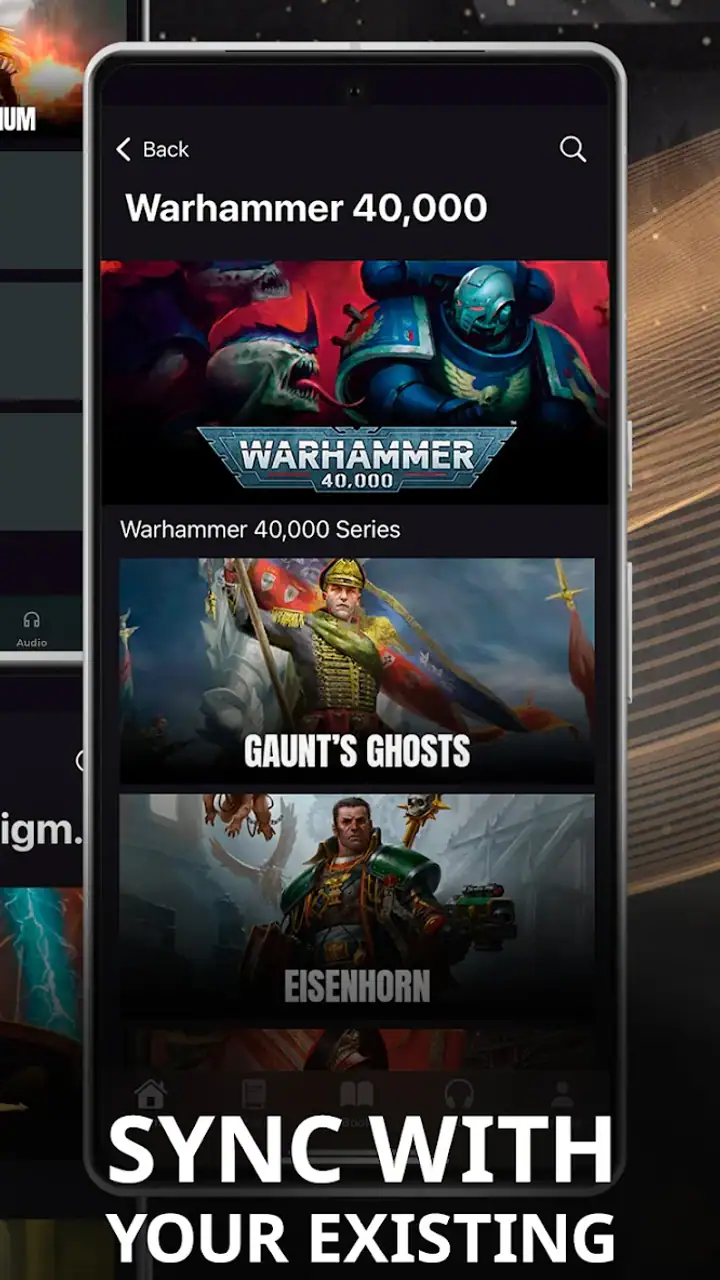
There is a less obvious benefit for readers who are exploring a large fictional universe. Warhammer fiction can feel intimidating because there are many factions, eras, and series. A dedicated catalog gives the reader a more relevant starting point than a broad book app, where the surrounding recommendations and search results may have little connection to the setting. I would still research reading order independently, but the focused environment can make the first step feel less scattered.
Where the focused catalog has an advantage
In my experience, the strongest argument for this app is not that it reinvents reading. It is that it keeps the Warhammer reading journey in one recognizable place. That matters when your interests are specific enough that general alternatives create noise. The app’s identity is tied to Black Library, and that can be more useful than a technically broader platform if you already know what you want to read.
It is also a sensible option for someone who wants to switch between text and audio according to context. An eBook works during a quiet break, while an audiobook can fill a walk or household task. I would not assume that every title has both formats, but the app’s emphasis on both types makes it a natural place to check before buying elsewhere.
Another practical strength is portability. A phone is usually closer than a bookshelf, and a digital library avoids carrying several novels on a trip. For a reader who follows long-running settings, that convenience can outweigh the appeal of collecting physical volumes. The trade-off is emotional rather than technical: digital access is tidy and flexible, while physical books provide a visible collection and a sense of ownership that an app cannot reproduce.
The app also makes sense as a discovery companion even if you do not make it your only reading tool. You might use it to identify a title, compare the available format, and decide whether the purchase belongs in your digital library. That workflow is especially useful when you are interested in one particular series rather than ready to move your entire reading life into a single application.
What the low rating changes about my expectations
I would be cautious about treating the low average rating as a minor detail. Around four hundred ratings and roughly one hundred twenty written reviews provide enough public reaction to make it part of the decision, even though a rating alone cannot explain every individual problem. For me, it means the app deserves a trial run before I buy several expensive items through it.
The rating does not automatically mean the catalog is unsuitable or that every reader will have the same experience. It does mean convenience should be tested, especially around the actions you will repeat most: locating a title, opening it, returning to it later, and moving between reading and listening. If any of those steps feel awkward on your device, the app’s specialized catalog may not compensate for the friction.
I would also avoid judging it only by the first launch. Reading apps are used repeatedly, and small interruptions become much more noticeable after a week than after five minutes. My advice is to test one inexpensive item or an existing accessible title first, then use it across several short sessions. That gives you a better sense of whether the app fits your routine before you make a larger purchase.
When another kind of reading app may be better
A general ebook platform is the safer choice if your library includes novels from many publishers and you want one familiar reading interface. It may be easier to keep unrelated books together, use an established annotation routine, or maintain a reading system that already works for you. I would choose that route for a casual reader who likes Warhammer occasionally but does not want a separate app for one publishing line.
An audiobook-focused service may suit you better if listening is your main activity and you already have habits built around playlists, queues, speed controls, or cross-publisher discovery. I am not assuming those alternatives have any particular feature in this comparison; the point is that their category is broader or more audio-centered. If you spend most of your time listening rather than reading, compare the complete listening workflow instead of choosing solely because a title appears in a dedicated catalog.
Physical books remain the better option for collectors, readers who dislike screens, or anyone who wants a permanent shelf display. They also avoid the practical annoyance of switching between digital libraries. On the other hand, they take up space and are less convenient when you travel. I would not replace a physical collection with this app unless portability and immediate access matter more to you than presentation and shelf ownership.
There is also a good reason to keep a general app alongside this one. A mixed setup can be more efficient than forcing every book into one service. You might use Black Library: The App for Warhammer discovery and digital purchases, then read other publishers through the app you already know. The cost is having two places to remember, but that may be preferable to losing a familiar workflow just to consolidate everything.
The real cost of changing your reading routine
Switching is not only about the download. The larger cost is rebuilding your habits: deciding where to search, remembering which app contains a title, and learning how your purchases are organized. If you already own a large digital collection elsewhere, moving completely may not be worth the effort. I would start with new Black Library purchases rather than trying to reorganize every book at once.
Money also deserves careful attention. The app itself is free, but individual purchases can range from a few dollars to nearly one hundred dollars. That makes format selection important. An audiobook may be the right choice for commuting, while an eBook may suit quiet reading, but buying both without a clear plan can become expensive. I would compare the value of each format against how often I realistically expect to use it, not simply choose the most convenient option in the moment.
Before buying, I would make a short personal checklist: Is this the correct series? Do I want audio or text? Am I starting at the right point? Will I use the title soon? That last question is surprisingly useful. A digital purchase is easy to make while browsing, but an unread library can become just as cluttered as an overfilled physical shelf.
The current version is 1.1.0, and the app was released on March 12, 2026. I would therefore judge it as a relatively early product experience rather than expect the maturity of an application that has spent many years refining every edge case. That does not make it unusable, but it reinforces my preference for a gradual trial, especially given the public rating.
Small workflows that make the decision easier
One useful workflow is to treat the app as a format decision tool. When I know I want a particular story, I would first check whether the available edition matches the way I plan to consume it. For a long trip, audio may be more practical; for detailed lore reading, text may be easier to pause, revisit, and compare. Making that decision before purchase reduces the chance of paying for a format that does not fit the occasion.
A second workflow is to separate discovery from commitment. I would browse when I have time, note the titles that genuinely interest me, and buy only when I know which one I am ready to start. This is especially important with a catalog designed around a passionate fandom, where familiar names and cover art can encourage impulse purchases. The app is most useful when it supports a reading plan rather than constantly expanding an unfinished queue.
A third tip is to test the app under the conditions in which you will actually use it. If you plan to listen while walking, test playback with the phone locked and with headphones you normally use. If you plan to read at night, check whether the text presentation feels comfortable in a dim room. I am not claiming a particular control or setting exists; I am saying that your own routine should be the final test because a catalog cannot fix an uncomfortable reading experience.
For newcomers, I would begin with one setting or faction that already interests you instead of trying to understand the entire Warhammer universe. A focused starting point makes it easier to judge whether the app helps you discover books or merely presents a large list. Once you know that its catalog and format fit your taste, expanding gradually is less risky than buying several unrelated titles at once.
My recommendation for different kinds of readers
I recommend trying Black Library: The App if you are an active Warhammer reader who wants audiobooks and eBooks in a dedicated environment. The free entry point makes a cautious test reasonable, and the focused catalog is more relevant than a general bookstore when Black Library is the main thing you want to explore. I would start small, verify the reading or listening flow on your own device, and purchase only a title you expect to use soon.
I would recommend skipping it as your primary reading app if you mainly read unrelated publishers, already have a comfortable general ebook library, or strongly dislike managing multiple storefronts. I would also be hesitant if you expect a polished, universally reliable experience from the first session. The low average rating means the app should earn your trust through practical use rather than receive it automatically from the strength of the Warhammer name.
For collectors, the decision is more personal. This app offers portability and a compact digital shelf, but it cannot replace the pleasure of owning printed volumes. For commuters and multitaskers, the audio side may be the more persuasive reason to try it. For lore newcomers, the dedicated focus can reduce irrelevant search results, although you will still need your own judgment about where to begin.
My final view is cautiously positive for the right audience and clearly negative as a universal recommendation. Games Workshop Limited has created an app with a valuable purpose for Black Library readers, but its narrow audience and low public rating make a careful trial essential. Choose it for focused Warhammer reading, not simply because it is free. If one title plays a meaningful part in your routine and the purchase process feels comfortable, it can become a useful companion. If your priority is a broad, highly familiar reading system, another category of app will probably serve you better.
FAQs for Black Library: The App
What is Black Library: The App, and what can I use it for?
Black Library: The App is designed for fans of Black Library fiction, including novels, short stories, audiobooks, and related Warhammer publications. It provides a convenient way to explore available titles, discover authors and series, and keep track of books connected with Warhammer 40,000, Age of Sigmar, and other settings. Availability and features may vary by region and platform.
Does Black Library: The App let me read or listen to books directly?
The app’s main purpose may be browsing, discovering, and accessing Black Library content rather than replacing every dedicated reading or audiobook service. Depending on the title, region, and current app features, you may be directed to purchase or open content through an associated store or service. Check each title’s details before downloading, especially if you expect offline reading or listening.
Is Black Library: The App free to download and use?
The application may be available as a free download, but that does not necessarily mean all books, audiobooks, or premium content are free. Some titles can require individual purchases, subscriptions, or access through another platform. Before confirming a transaction, review the displayed price, supported payment method, regional restrictions, and any recurring billing information shown in the store or app.
Which devices and operating systems support Black Library: The App?
Support depends on the version released for Android or iOS and on the requirements listed by the relevant app store. Users should check the current compatibility information before installing, including the minimum operating-system version, available storage, and whether an internet connection is required. Older phones and tablets may experience limited performance or may no longer receive full support.
Do I need an account or an internet connection to use the app?
Some features may be available without signing in, such as browsing selected information, while purchasing, saving preferences, syncing activity, or opening linked content may require an account. An internet connection is generally recommended for loading catalogs, updating information, authenticating purchases, and accessing online material. Offline access, if offered, can depend on the specific title and service used.
Pros
- Official access to a large selection of Black Library ebooks and audiobooks.
- Useful for Warhammer fans who want releases in one dedicated app.
- Supports reading and listening
- making content convenient on the go.
- New titles and featured collections are easy to discover.
- Your library stays organized without needing separate ebook apps.
Cons
- The catalog may not include every Black Library title or older edition.
- Many books and audiobooks require additional purchases after installation.
- Some content can consume considerable storage when downloaded offline.
- Availability and pricing may vary between countries and platforms.
- The app is mainly useful to Warhammer readers
- limiting its broader appeal.


